Morgan McKinley Ireland Quarterly Employment Monitor: Professional Jobseekers Up 51% Year on Year, But Employers Still Struggle To Find Specialist Talent

AI reshaping hiring, workforce planning and recruitment processes across professional roles
14 October 2026: Professional job openings across Ireland remained broadly stable in Q3 2026, rising by just 0.2% on the previous quarter but down 4.8% year on year, according to the latest Morgan McKinley Ireland Employment Monitor. Professional jobseeker registrations rose sharply, up 14.1% quarter on quarter and 51% year on year. However, the increase in registrations does not represent a corresponding increase in unemployment or immediately available talent, as many professionals exploring opportunities remain in permanent employment.
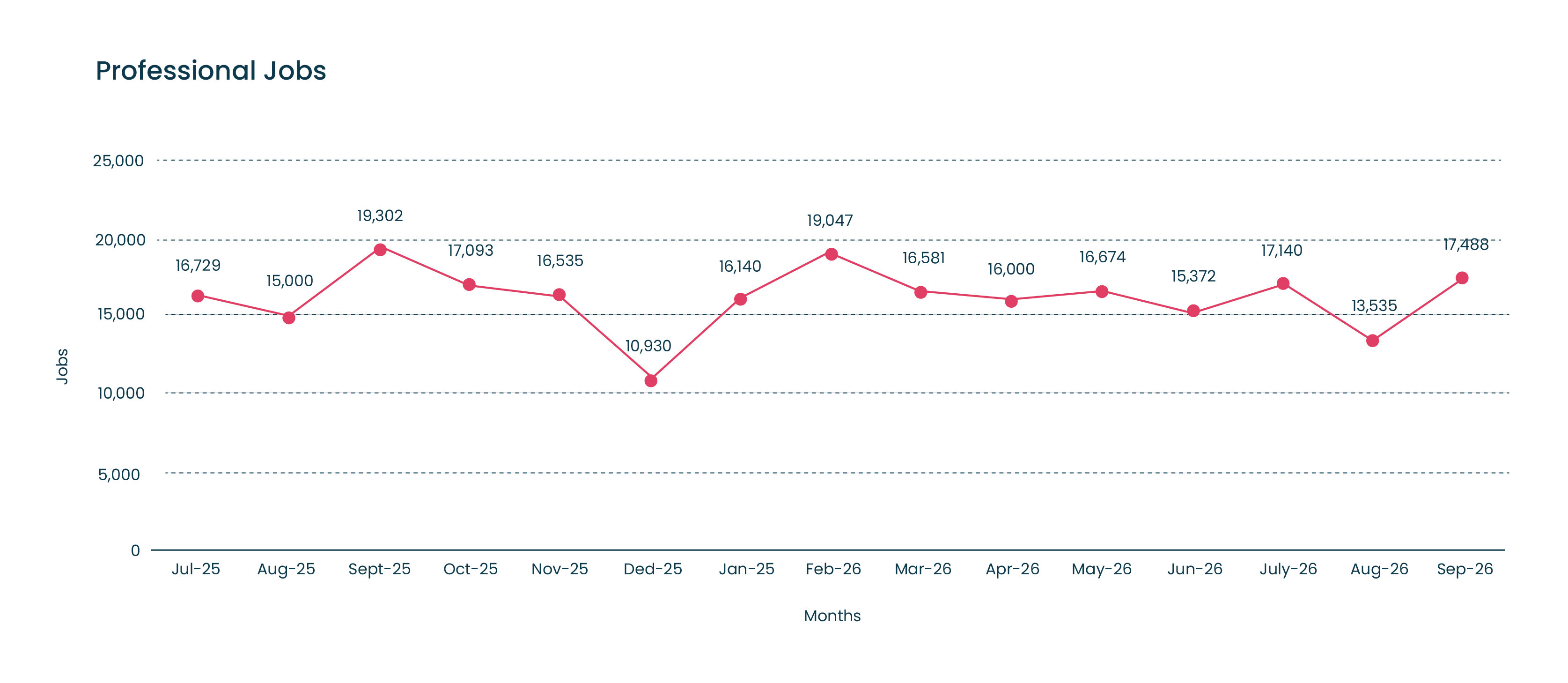
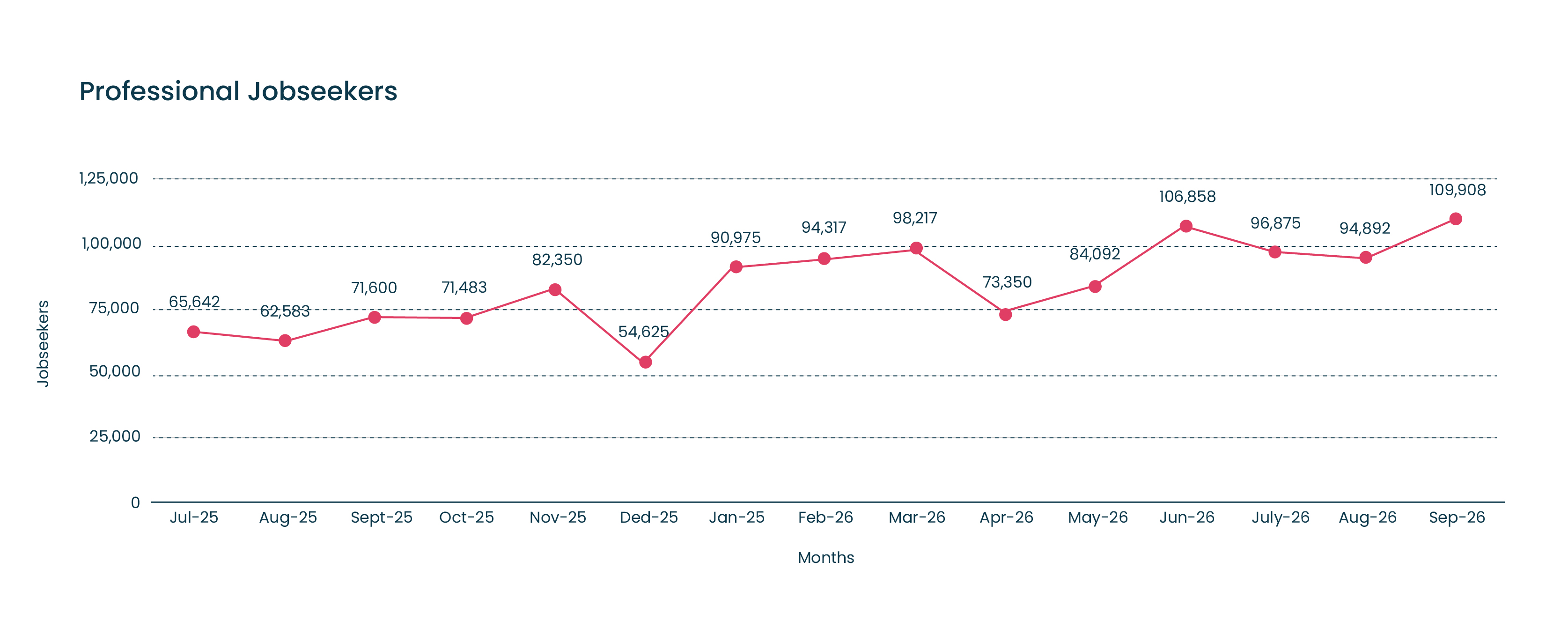
With professional jobseeker registrations up 51% year on year and job openings rising by just 0.2% during the quarter, Ireland’s professional labour market has become more competitive for candidates without making hiring significantly easier for employers.
The increase in jobseeker activity reflects corporate restructuring, technology sector consolidation, evolving hybrid working requirements and longer recruitment processes. Hiring remained resilient through the traditional summer slowdown, but organisations continued to scrutinise permanent headcount, with demand strongest in roles linked to regulation, infrastructure investment, risk management, data, AI and project delivery.
Contract, temporary and fractional hiring remained a key feature of the market as employers sought to access specialist expertise without committing too quickly to permanent roles. AI is also reshaping recruitment itself, with employers expecting practical AI capability across finance, HR, marketing and operations, while managing a rise in AI assisted applications, AI generated CVs and concerns around candidate authenticity.
Trayc Keevans, Global FDI Director, Morgan McKinley Ireland, said: “The headline numbers suggest the labour market has become more favourable for employers, but the reality is more nuanced. Candidate availability has increased significantly over the past year, yet organisations continue to compete intensely for people with specialist expertise.
“What we are seeing is a growing divide between volume and capability. There are more professionals actively looking for opportunities, but employers still face shortages in areas such as AI, cyber security, engineering, construction, compliance and employment law. These are the skills employers need to manage regulation, deliver major projects and adapt to new technology.
“AI is now influencing almost every hiring conversation. Employers are looking beyond technical qualifications to identify candidates who can apply new technologies in commercial, regulated and customer focused environments. The strongest candidates are those who can combine specialist expertise with adaptability, judgement and problem solving.
“Technology hiring in Q3 was shaped by a rapid shift from traditional development skills towards AI-enabled roles. GenAI Engineers, Data Engineers and Software Engineers with practical AI capability were among the most sought-after candidates, while Solutions Architects are increasingly expected to bring explicit generative AI experience. US companies establishing AI engineering hubs and Centres of Excellence in Ireland are adding further demand for AI, MLOps, data engineering, cloud, DevOps and security skills, as traditional contract demand for full-stack, Java and React/Node roles softens.
“Financial services hiring was driven by regulation, risk and expansion rather than broad based growth. Banks, insurers, funds, fintechs and wealth managers continued to hire, with strongest demand in credit risk, regulatory reporting, AML, financial crime, product, transformation and technology risk. AI is also entering day to day financial services work, but employers are placing most value on candidates who can challenge and validate AI outputs.
“Accounting and finance is beginning to show how AI could change replacement hiring. In Dublin, some employers are assessing whether automated workflows can absorb transactional finance work before backfilling roles, particularly in larger organisations. Demand is shifting towards commercial finance, business partnering, forecasting, cash flow, FP&A and practical AI use.
“Legal hiring became sharper around employment law. Demand has intensified as employers prepare for AI related redundancies and as more employees use AI to prepare Workplace Relations Commission claims. Employment lawyers are seeing salary pressure because demand is acute and supply is not increasing.
“Life sciences and engineering remained busy, with employers under pressure to deliver projects, expand capacity and improve productivity. Demand was strongest for validation, automation, CQV, utilities, quality, maintenance and project engineering talent, supported by investment in pharma, medtech and advanced manufacturing.
“Construction remains under severe pressure, with demand from housing, infrastructure, life sciences, data centres and advanced manufacturing continuing to outstrip experienced talent. Shortages in quantity surveying, project management, site engineering, mechanical and electrical roles, planning and health and safety are now constraining delivery. Ireland is also competing with overseas markets for construction professionals, while housing costs, living costs, public transport gaps and uncertain project start dates linked to planning delays are making it harder to attract and retain talent.
“Executive search was shaped by demand for leaders who can manage technology, transformation and major private construction projects. Chief Transformation Officers, Chief Information Officers, Chief Data Officers and Heads of AI were in demand as organisations brought technology leadership closer to the business. Private data centre development also drove demand for Commercial and Construction Directors, while fractional CFO and HR Director roles continued to grow as companies sought senior expertise without full permanent appointments.
“Business support is one of the areas where AI and restructuring are being felt most directly. Demand returned after a quieter summer, but redundancies among Executive Assistants and senior operations roles in Dublin show how tighter budgets and AI adoption are changing support functions.
“HR teams are being asked to manage the consequences of a more cautious labour market. Demand remained active for HR business partners, employee relations, HRIS, reward, benchmarking and change specialists, while employers also looked for HR professionals who can support role redesign, AI adoption, regulation and return to office policies.
“Supply chain and procurement became more cautious during Q3, although logistics and technology procurement stood out. Senior logistics demand improved after a quieter period, while technology procurement professionals are increasingly involved in assessing AI providers and procurement transformation. AI is beginning to automate purchase order processing and spend classification, but category management, negotiation and supplier relationships remain dependent on human judgement.
“Projects, transformation and change continued to benefit from organisations trying to deliver more with tighter budgets. Demand was strongest for programme managers, project managers, change managers and business analysts who can rescue challenged projects, mobilise programmes and manage complex digital or AI led change. Competition increased, particularly at senior level, while some organisations in financial services and technology reduced Irish based roles through offshoring.
“Marketing hiring picked up in September as organisations used remaining budgets and finalised 2027 plans, but employers are demanding clearer commercial impact. The strongest demand is for marketers who can connect campaigns to revenue, retention and customer growth, while using AI, automation, CRM and lifecycle marketing effectively.
“Sales remained one of the steadier markets, with consistent demand for enterprise account executives, sales development representatives, field sales representatives, account managers and sales operations specialists. Candidate shortages remain in specific areas, particularly construction related sales roles.”
Monthly New Jobs
Monthly new jobs and new candidate figures are based on Morgan McKinley’s monthly records of new permanent and contract job vacancies and new jobseekers registering with the firm for employment.
Statistics for the full market are derived using Morgan McKinley’s market share. Effective November 2024, a recalibration of the jobseeker calculation methodology was implemented to reflect modifications in client vacancy advertising protocols.
Job Classification
Job vacancies are professional-level positions within the following sectors and functions: Legal, Funds, Technology, Admin / Office Support, Sales, Supply Chain & Procurement, Life Sciences, Executive Search, HR, Multilingual, Contract, Marketing, Banking & Financial Services, Accounting & Finance, and Projects, Transformation & Change.
Geography
The data is based on new job vacancies and new jobseekers registered with Morgan McKinley’s network of Irish offices in Cork, Dublin, Galway, Limerick and Waterford.
About Morgan McKinley
Irish owned Morgan McKinley is a global talent services expert, offering the full spectrum of solutions to meet employers’ and jobseekers’ needs. With 19 offices in 10 countries and nearly 1,000 employees, it provides 3 distinct solutions for customers. Morgan McKinley Recruitment Solutions encompassing deep expertise across 10 professional disciplines offering temporary, contract and permanent recruitment; Morgan McKinley Executive Search for targeted C-Suite talent searches; and Morgan McKinley Talent Solutions including RPO (Recruitment Process Outsourcing), MSP (Managed Service Provision), Project Recruitment and more.