

London Employment Monitor Q2 2026

London Hiring Slows as Employers Wait for Political Clarity
Key findings from Morgan McKinley’s 2026 London Employment Monitor:
- 5% decrease in jobs available quarter-on-quarter (Q2 2026 vs Q1 2026)
- 3% decrease in jobs available year-on-year (Q2 2026 vs Q2 2025)
Professional job vacancies in London fell to 4,636 during the second quarter of 2026, down 5% from the previous quarter and 3% year-on-year, according to the latest Morgan McKinley London Employment Monitor.
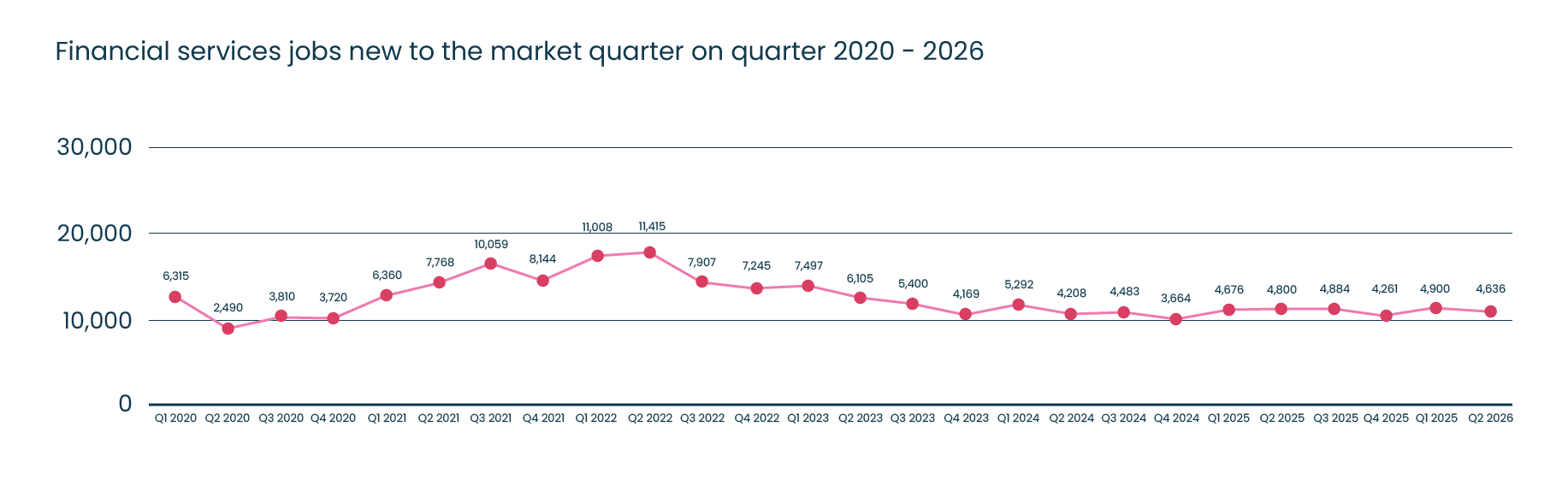
Mark Astbury, Director, Morgan McKinley said: “The second quarter of 2026 saw London’s professional hiring market take a modest step back after a strong start to the year, with vacancies falling 5% quarter-on-quarter and 3% compared with the same period last year. While the decline is relatively contained, it reflects growing caution among employers, who are once again making hiring decisions against an increasingly uncertain political and economic backdrop.
“Business leaders are once again facing political uncertainty following Prime Minister Keir Starmer's resignation. Many organisations are delaying recruitment until there is greater clarity over the Government's direction and economic priorities. Employers do not expect complete certainty, but they do need a stable policy environment to support long-term investment and hiring decisions.
“This June marks ten years since the Brexit referendum, capping a decade of almost continuous disruption. From Brexit and the pandemic to geopolitical tensions and changing global trade policies, employers have repeatedly adapted hiring strategies in response to external shocks. As an international financial centre, London remains particularly sensitive to developments affecting global trade, investment and business confidence.
“What is particularly notable is that stronger-than-expected GDP growth has not translated into stronger hiring confidence. Businesses continue to face rising employment costs, including higher taxes and wage pressures, while balancing investment against profitability.
“Although economic indicators have shown some resilience, many employers remain reluctant to expand headcount until there is greater clarity around the UK’s economic and political outlook. This does not mean recruitment has stalled. Organisations continue to hire where they see clear commercial value, but recruitment processes are becoming more targeted and selective.
Astbury concluded: “Demand remains strongest for professionals who can drive growth, improve productivity and support digital transformation. Investment in AI and automation continues to create opportunities for skilled technology talent. London's jobs market has demonstrated remarkable resilience, but employers remain cautious. Until there is greater political and economic certainty, we expect recruitment activity to remain measured, with businesses prioritising quality over quantity over broad expansion.”