
How to Find the Right Talent in Australia’s Current Job Market

Did your approach to hiring need to shift in 2025? While competition for specialist skills remained high, receiving applications for open roles was not the issue – separating the legitimately qualified candidates from their AI-polished CVs was.
“Employers saw higher volumes of applicants per role, but the real challenge lay in separating quality from quantity. Job seeker activity rose as unemployment edged higher, but this did not necessarily make recruitment easier,” explains Dominic Bareham, Managing Director of Morgan McKinley Australia.
With Australian applicants per role doubling in the last three years, it is vital that Australian businesses are able to create rigorous screening and selection processes that enable them to find candidates with the proven skills they need.
However, with more candidates than usual in the job market, it’s a brilliant opportunity to find high-quality talent. Here are some insights from our brand new Australian Salary Guide to help you separate the AI-enhanced from the adept.
1. Understand Job Market Shifts
Shift 1: The move from speed to quality
In the last year or so, the job market in Australia has moved from candidate-driven to a more measured and tight market. Meanwhile, high application volumes (fueled by AI-assisted CVs) are making it harder, not easier, to find top-tier talent.
This has meant that employers need to move from a focus on simply filling roles quickly to taking the time to fully assess both the cultural and skill alignment of their candidates in their screening process.
Shift 2: The need to attract scarce skill sets
In the Australian job market, like in many other markets worldwide, there remains a persistent scarcity in certain areas such as cybersecurity, data analytics, and generative AI.
For these and all roles, employers will need to go beyond offering just salary. With both candidates and employees increasingly using salary calculators to assess “fair pay”, employers will need to also offer great employee experience once they are in the door. We’ll touch on how to grow this later in the article.
2. Introduce Skill-Based Assessment
Wondering what you can do to simplify your search in the era of AI-created applications? Dominic Bareham advises two approaches: “Employers who adapt their hiring processes by embracing skills-based assessments and thoughtful candidate engagement will have a clear advantage.”
For example:
- Accounting & Finance: Test their knowledge of ERP systems like SAP or Oracle by giving them a 30-minute task to complete.
- Banking & Financial Services: Ask them to provide a summary of the new APRA reporting requirement and explain how it will impact the firm.
- Projects, Strategy & Change: Complete a roleplay with the recruiter playing a difficult department head or ask them to reprioritise a backlog.
- Risk & Compliance: Provide an existing policy and ask them to identify gaps based on recent regulatory updates, such as ASIC or AUSTRAC.
- Technology: For cybersecurity, provide a mock environment with a known vulnerability and ask them to identify and patch the breach.
3. Understand the Impact of AI on Industries
Not only has AI dramatically changed what the application process looks like for candidates (and as a result, the screening process for employers), it has changed the scope of the specific roles you should look to hire for.
For example, insights from our Australia Salary Guide show that in Accounting & Finance, AI has automated manual tasks and turned accountants into strategic business partners, so it’s important these candidates can demonstrate big-picture thinking too. In Risk & Compliance, there is now a need to hire for AI-related risk, fraud and data privacy.
4. Use Contract Hiring for Speed
Do you have vital projects that are already behind as you await a new hire? Many Australian businesses are looking to contract hiring to solve for this. In Accounting & Finance for example, contractors are often used for transformation projects, system upgrades and parental leave projects.
In Projects, Strategy & Change, many businesses lean on contractors to deliver critical change programmes, while regulatory changes such as CPS 230 in June 2025, often create a strong contractor demand too. In technology, contract roles are often used for urgent projects and niche skill requirements.
Want to explore contracting hiring? Find out here how our team can help you take the first steps to finding top contractors.
5. Be Transparent About Salary
Candidates will no longer accept a lack of clear information about compensation: “In the current climate of economic uncertainty, regulatory shifts, and ongoing digital transformation, salary transparency and fair pay practices have become essential”, says Dominic.
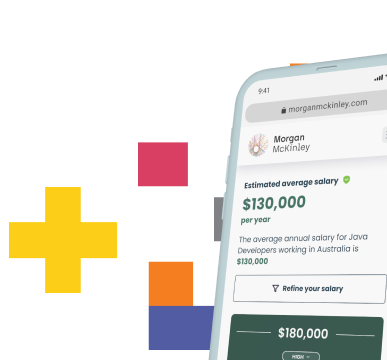
If you can, provide clear salary ranges in job advertisements at the outset and be upfront and clear about compensation throughout interactions with candidates to increase their trust. Plus, ensure the salaries that you are offering reflect market rate using a salary calculator.
6. Use Employee Experience as a Differentiator
In the current job market, a competitive salary and benefits package is the baseline. Employers need to also consider what new hires will encounter once onboarding is complete.
For example, assess what kind of opportunities the business is currently providing in the areas of continuous learning, upskilling and mentorship opportunities. Consider if existing employees and new hires are being provided with enough flexibility and whether you can do more to build a culture of recognition.
Want to learn more about the trends defining the Australian jobs market? Download our new salary guide – or speak to one of our consultants about your hiring.