How to Build Transferable Skills for an AI-Driven Workplace

The growth of artificial intelligence has led to a major reassessment of work. As roles, responsibilities and required skills continue to evolve, many employees are asking how they can remain relevant in a fast-changing job market. This concern is not unfounded.
According to a World Economic Forum report, 40% of the skills required for jobs today are expected to change by 2030. More than 63% of employers already identify skills gaps as a key barrier to business transformation.
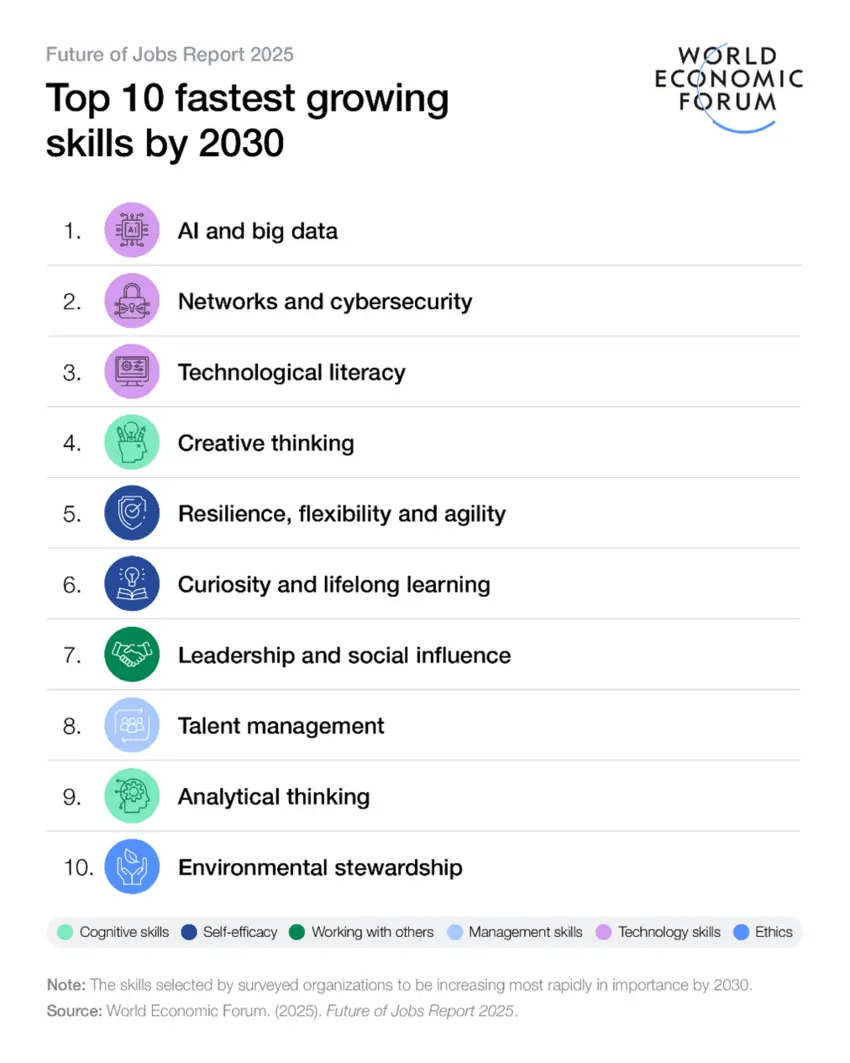
The same report lists the 10 fastest growing skills expected to be in demand by 2030. Interestingly, seven of these are transferable skills, while only three are technology skills.
Transferable skills, also known as portable skills, are skills that employees can apply across different jobs, industries and working environments. Regardless of a person’s specific role, these skills remain relevant and can help them move between jobs, take on new responsibilities or explore different career paths.
For example, strong communication, time management and teamwork are transferable skills that can help employees adapt to new environments and succeed in a range of professions.
Why Are Transferable Skills Now More Critical Than Ever?
Transferable skills have always been important, but the rapid advancement of artificial intelligence has placed a stronger focus on them. With the adoption of generative AI, the learning curve for many technical aspects of a job has become shorter.
For example, a junior employee with a basic understanding of coding can use AI tools to write applications and launch them more quickly. Similarly, someone with entry-level data analysis skills and familiarity with relevant tools can use AI to analyse large data sets and generate insights.
However, using AI effectively requires more than technical knowledge. Employees need to know how to ask the right questions, assess the quality of the output, identify inaccuracies and apply the results appropriately. They also need to understand the wider context in which the technology is being used.
As AI continues to change job roles and responsibilities, transferable skills stand out because they bring human judgement and thinking into the workplace. Skills such as critical thinking, creativity, communication, collaboration and attention to detail help employees work effectively with AI rather than simply rely on it.
These skills also help employees respond to change. While specific tools and technical processes may become outdated, the ability to learn, solve problems, communicate clearly and work with others can remain valuable throughout a career.
Top 10 Transferable Skills Employees Need
Transferable skills can be developed through everyday work and are often demonstrated through how employees approach tasks, work with others and respond to challenges. Here is our take on the top 10 transferable skills:
1. Communication
Communication is the ability to share information, ideas and expectations clearly, while also listening and responding effectively. It helps employees build trust, reduce misunderstandings and work productively with different people.
Strong communication is useful in almost every role because employees need to explain their thinking, ask questions, provide updates and adapt their message for different audiences. It can also improve an employee’s visibility by helping them present their ideas and contributions with confidence.
Examples:
- Sales Executive: Explains a product’s benefits in a way that responds to a customer’s specific needs to increase the likelihood of a successful sale.
- Project Manager: Communicates deadlines, responsibilities and potential risks clearly to help the team stay aligned and avoid delays.
- Software Developer: Translates technical information into clear language so that non-technical colleagues can make informed decisions.
How it helps in the AI age: AI can generate emails, reports and presentations, but employees still need to decide what to say and how to deliver the message. Communication helps employees write clear prompts, assess AI-generated content and explain the results to others. It is also essential when employees need to communicate the limitations, risks or implications of using AI in their work.
2. Creative Thinking
Creative thinking is the ability to generate new ideas, explore different possibilities and approach familiar challenges in fresh ways. It helps employees improve processes, develop solutions and identify opportunities that may not be obvious at first.
Creative thinking is valuable in every role because organisations need employees who can look beyond existing routines and suggest better ways to work.
Examples:
- Marketing Executive: Develops a campaign concept that presents a familiar product in a new and more engaging way.
- UX Designer: Creates wireframes by understanding the user painpoints to design a smooth user experience.
- Operations Coordinator: Redesigns a repetitive process to reduce delays and improve the customer experience.
How it helps in the AI age: AI can produce ideas quickly, but it often relies on existing information and patterns. Creative thinking helps employees develop more original ideas, improve AI-generated suggestions and recognise when an answer is too generic. It also helps employees decide how AI can be used in new ways to improve a product, service or process.
3. Analytical Skills
Analytical skills help employees examine information, identify patterns and reach evidence-based conclusions. They support better decision-making and help employees understand the reasons behind a problem or opportunity.
These skills are important because employees are often required to work with information from different sources and use it to make practical recommendations.
Examples:
- Financial Analyst: Reviews financial data to identify trends and assess the potential risks of an investment.
- HR professional: Examines employee data to understand patterns in staff turnover and recommend ways to improve retention.
- Public Policy Researcher: Compares research findings to assess the likely impact of a proposed policy.
How it helps in the AI age: AI can process large amounts of information, but employees need analytical skills to understand what the data means and whether the conclusions are reliable. They must be able to identify missing information, recognise misleading patterns and assess whether an AI-generated recommendation is relevant to the business or situation.
4. Attention to Detail
Attention to detail is the ability to notice errors, inconsistencies, omissions and important information. It helps employees produce accurate, reliable work and identify potential issues before they become more serious.
This skill is particularly important in roles where small errors can affect finances, safety, compliance, customer relationships or business reputation.
Examples:
- Accountant: Checks figures and financial records carefully before preparing a report.
- Recruiter: Reviews a candidate’s experience and qualifications against the requirements of a role.
- Content Manager: Identifies factual, grammatical and formatting errors before an article is published.
How it helps in the AI age: Attention to detail helps employees review AI output, check important information and identify anything that needs correcting. It is especially valuable when AI is used to create reports, analyse data, draft communications or support decisions where accuracy is essential.
5. Adaptability
Adaptability is the ability to adjust to changes in responsibilities, processes, technology, teams or working environments. It helps employees remain effective when familiar ways of working are replaced or when unexpected challenges arise.
Adaptable employees are more likely to approach change with curiosity, learn new skills and find ways to remain productive during periods of uncertainty.
Examples:
- Customer Service Adviser: Learns a new customer relationship management system after the organisation changes its software.
- Engineer: Learns to work with new materials or equipment as project requirements develop.
- Marketing professional: Changes a campaign after customer feedback shows that the original approach is not producing the expected results.
How it helps in the AI age: AI is changing the tasks carried out in many roles, which means employees may need to learn new tools and take on new responsibilities. Adaptability helps them respond to these changes rather than rely only on familiar processes.
6. Time Management
Time management is the ability to plan work, set priorities, organise tasks and meet deadlines. It helps employees manage competing demands and focus their attention on activities that have the greatest impact.
Effective time management can improve productivity while also helping employees set realistic expectations and maintain a sustainable workload.
Examples:
- Content Writer: Manages research, interviews, writing and editing within a strict publication deadline.
- Healthcare professional: Prioritises patient needs while completing essential administrative responsibilities.
- Legal Assistant: Tracks deadlines across multiple cases and ensures that documents are prepared and submitted on time.
How it helps in the AI age: AI can help employees complete routine tasks more quickly, but employees still need to decide how to use the time saved.
Time management helps them prioritise higher-value work, review AI-generated output and avoid taking on more work than they can complete effectively. It also helps them manage the time needed to learn new AI tools and understand how they can be used responsibly.
7. Problem-Solving
Problem-solving is the ability to understand a challenge, identify its underlying cause and develop an appropriate solution. It helps employees deal with unexpected situations, improve processes and prevent recurring issues.
Employees who can solve problems effectively are often able to work with greater independence and contribute to improvements beyond their immediate responsibilities.
Examples:
- IT Support Specialist: Investigates why an employee cannot access a system and identifies a solution without disrupting wider operations.
- Supply Chain Coordinator: Finds an alternative supplier when a delivery delay threatens production.
- Civil Engineer: Identifies the cause of a structural issue and recommends a safe and practical solution.
How it helps in the AI age: AI can suggest possible solutions, but it may not understand the full context, practical limitations or human consequences of a problem. Problem-solving skills help employees assess those suggestions and choose an approach that is realistic and appropriate.
8. Critical Thinking
Critical thinking is the ability to question information, examine assumptions, consider different perspectives and make a reasoned judgement. It helps employees avoid making decisions based on incomplete, biased or unreliable information.
This skill is important when employees face complex issues, conflicting opinions or pressure to act quickly.
Examples:
- Procurement Manager: Questions whether the lowest-priced supplier offers the best overall value after considering quality, reliability and risk.
- Researcher: Examines the methods and evidence behind a study before using its findings.
- Manager: Considers different perspectives before deciding how to respond to a conflict within the team.
How it helps in the AI age: Critical thinking is essential when employees use AI because AI tools can produce information that is incomplete, inaccurate or presented with unjustified confidence.
Employees need to question the output, check important claims and consider whether it is suitable for the intended purpose. It also helps to recognise bias, protect confidential information and decide when AI should not be used.
9. Teamwork
Teamwork is the ability to work effectively with others towards a shared objective. It involves sharing information, contributing reliably, respecting different perspectives and supporting colleagues when needed.
Good teamwork helps employees combine different skills and experiences. It can lead to better decisions, stronger working relationships and more effective outcomes than working alone.
Examples:
- Product designer: Works with engineers, researchers and marketing colleagues to develop a product that meets both customer and business needs.
- Construction Manager: Coordinates different teams and contractors to ensure that work is completed safely and according to schedule.
- Human Resources Adviser: Works with managers and employees to resolve a workplace issue fairly and effectively.
How it helps in the AI age: AI may change how work is divided between people and technology, but employees still need to agree on responsibilities, share information and make decisions together. Teamwork helps colleagues adopt AI consistently and prevents different people from working in isolation or using tools in conflicting ways.
10. Empathy
Empathy is the ability to understand another person’s feelings, experiences and point of view. In the workplace, it includes active listening, curiosity, perspective-taking and the ability to manage disagreements constructively.
Empathy helps employees build trust, respond sensitively and create stronger relationships with colleagues, customers and other stakeholders. It can also improve collaboration by helping people feel heard and respected.
Examples:
- Manager: Listens to an employee who is struggling and works with them to find appropriate support or adjustments.
- Customer Service Adviser: Understands a frustrated customer’s situation and responds in a way that acknowledges their concern before offering a solution.
- Healthcare professional: Considers a patient’s concerns and circumstances when explaining treatment options.
How it helps in the AI age: AI can imitate empathetic language, but it does not genuinely understand people’s experiences or take responsibility for the impact of a decision. Empathy helps employees recognise when a situation requires sensitivity, discretion and human judgement.
How to Identify Your Transferable Skills
Many employees use transferable skills every day without recognising or naming them. A practical way to identify yours is to connect each skill to real examples from your work, education, volunteering or personal experience.
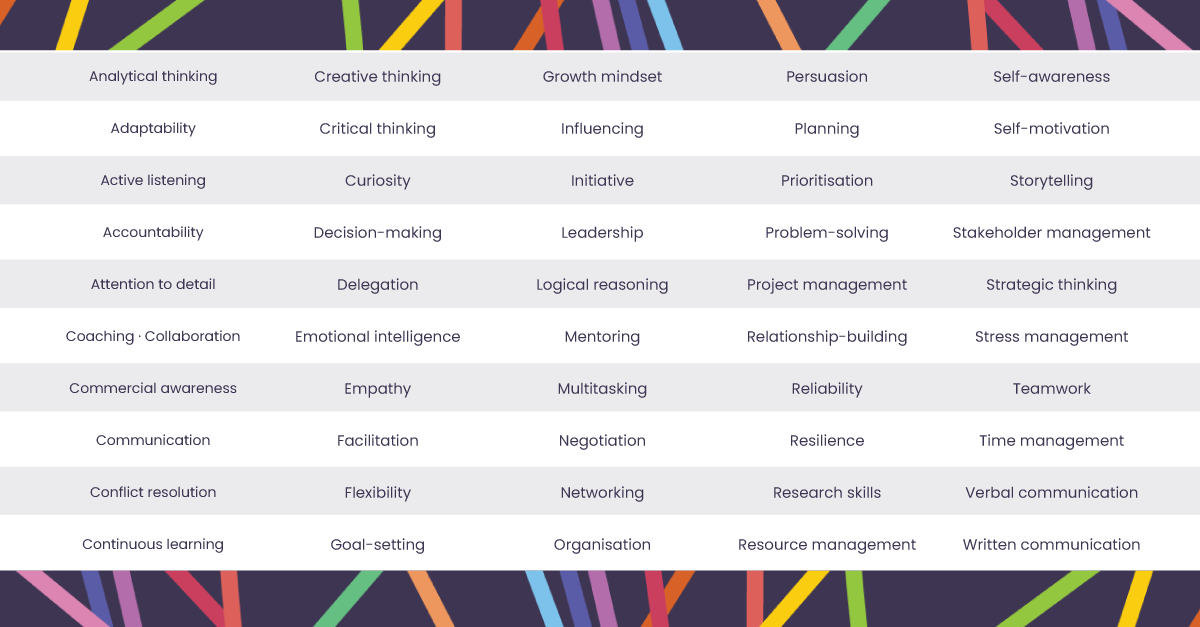
Use the transferable skills list above to complete the following exercise:
- Choose 10 skills from the list that you use regularly or believe are among your strengths.
- For each skill, write down one specific situation in which you used it. This could be a project you completed, a problem you solved, a difficult conversation you managed or a process you improved.
- Describe what you did, rather than simply stating that you used the skill. For example, instead of writing “I used communication skills”, explain how you presented a complex idea to a client or helped your team understand a change.
- Record the outcome of each example. Include measurable results where possible, such as time saved, a target achieved, an error reduced or positive feedback received.
- Identify the five skills that had the greatest impact on your results or helped you overcome the most significant challenges.
- Rank these five skills according to your level of confidence and effectiveness. Be honest about which skills are strengths and which still need development.
- Ask a manager, colleague or mentor whether they agree with your assessment. Their feedback may reveal strengths that you have overlooked or development areas that you have not considered.
- Create a final list of your top transferable skills, supported by a short example for each.
You can use this list when updating your CV, preparing for an interview, applying for an internal opportunity or discussing your career development with your manager.
A useful skills statement should show both the skill and the impact it had. For example:
Problem solving: Identified a recurring issue in the team’s reporting process, worked with colleagues to find the cause and introduced a new review step that reduced errors and improved turnaround times.
This is more effective than simply writing “good problem-solving skills” because it demonstrates how the skill was applied in practice.
How to Improve Your Transferable Skills
Transferable skills can be developed through deliberate practice. Start by choosing one or two skills from your list that you would like to strengthen. Focusing on a small number of skills makes it easier to practise consistently and measure progress.
You can improve your transferable skills by:
- Asking for feedback from managers, colleagues, clients or mentors
- Volunteering for projects that require you to use a skill in a new way
- Practising communication by presenting ideas, writing concise updates or explaining complex topics to different audiences
- Strengthening critical thinking by questioning assumptions, checking sources and considering alternative explanations
- Developing adaptability by learning a new tool, taking on unfamiliar tasks or asking to work with a different team
- Improving time management by reviewing how you spend your time, setting priorities and breaking large tasks into smaller steps
- Building empathy by listening without interrupting, asking questions and considering situations from another person’s perspective
- Using AI tools as learning partners, while checking their outputs and making your own informed decisions
- Keeping a record of achievements and challenges so that you can identify patterns in your progress
- Reviewing your skills regularly as your role, industry and career goals develop
The most effective approach is to connect development to your everyday work. If you want to improve your problem-solving skills, volunteer to investigate a recurring issue.
If you want to strengthen your communication, offer to lead a presentation or write a project update. If you want to become more adaptable, seek opportunities to work with unfamiliar tools or processes.
As the workplace continues to change, employees will need both technical knowledge and the human skills that allow them to apply that knowledge effectively. Building transferable skills can help you remain valuable in your current role while preparing you for new opportunities in the future.